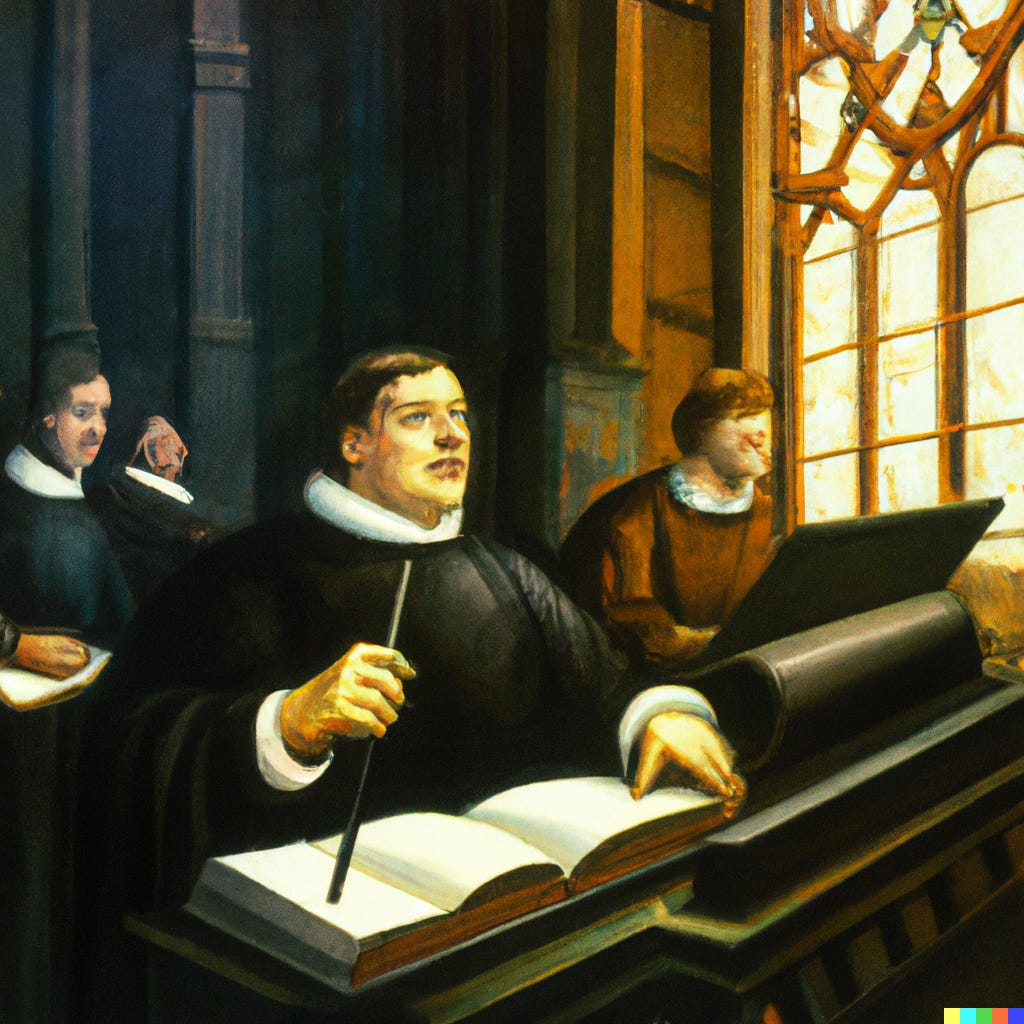
"Young Man Luther" is a groundbreaking book written by renowned psychologist and psychoanalyst Erik Erikson in 1958. The book is a psychobiography of Martin Luther, the German theologian and central figure of the Protestant Reformation. In this work, Erikson uses Luther's life and writings to explore the relationship between individual psychological development and historical change.
The Developmental Crisis of Martin Luther:
Erikson's analysis of Martin Luther's life is grounded in his own developmental theory, which posits that individuals undergo a series of psychosocial crises throughout their lives. According to Erikson, Luther's psychological struggles can be understood in the context of these crises, particularly the conflict between identity and role confusion.
Erik Erikson's developmental theory, also known as the Eight Stages of Psychosocial Development, posits that individuals experience a series of psychosocial crises at various stages in their lives. These crises are centered around the conflict between two opposing dispositions. The successful resolution of these crises leads to the development of essential virtues, while failure to resolve them may result in psychological difficulties.
Erikson's stages of development are as follows:
Trust vs. Mistrust (Infancy)
Autonomy vs. Shame and Doubt (Early Childhood)
Initiative vs. Guilt (Preschool Age)
Industry vs. Inferiority (School Age)
Identity vs. Role Confusion (Adolescence)
Intimacy vs. Isolation (Young Adulthood)
Generativity vs. Stagnation (Adulthood)
Integrity vs. Despair (Late Adulthood)
In "Young Man Luther," Erikson focuses on the fifth stage of development, which occurs during adolescence and is characterized by the conflict between identity and role confusion. This stage is critical for the formation of an individual's self-concept, as they grapple with questions about their identity, beliefs, and place in the world.
In the case of Martin Luther, his psychological struggles were rooted in this conflict. Luther's early life was marked by a strict upbringing and high expectations from his father, which led to feelings of guilt, anxiety, and confusion about his identity. As he entered adulthood and joined the Augustinian monastery, Luther's internal conflict deepened as he struggled with his religious beliefs, the nature of God, and his own unworthiness.
Erikson explores the wider implications of Martin Luther's psychological transformation on religion and society in the latter part of "Young Man Luther." He demonstrates how Luther's newfound sense of identity and purpose, which emerged from his personal struggle and the resolution of his psychological conflict, enabled him to challenge the Roman Catholic Church's teachings and practices, ultimately leading to significant religious and social change.
Erikson does this by emphasizing the role of Luther's personal struggle in shaping the course of history. He points out that the discovery of the doctrine of justification by faith alone allowed Luther to resolve his internal conflict and redefine his relationship with God and religious authority. This transformation in Luther's personal life had a profound impact on his actions and beliefs, which in turn influenced the broader historical context.
By examining Luther's actions following his psychological transformation, Erikson demonstrates the interplay between individual psychology and collective historical events. For example, Luther's public challenge to the Church's authority by posting the Ninety-five Theses in 1517 marked the beginning of the Protestant Reformation, a movement that would dramatically reshape the religious, political, and social landscape of Europe. Erikson argues that this historical event can be traced back to Luther's personal struggle and his quest for a deeper understanding of his faith and identity.
As Martin Luther grappled with his religious beliefs, the nature of God, and his own unworthiness, his internal conflict intensified. This struggle was rooted in his early life experiences, his family dynamics, and the religious environment in which he was raised.
One significant aspect of Luther's struggle was his deep sense of unworthiness. Growing up in a devout Catholic family, he was exposed to the teachings of the Church that emphasized the sinful nature of humans and the importance of confession, penance, and good works to secure salvation. The high expectations placed upon him by his father and the strict discipline he experienced further exacerbated his feelings of guilt and unworthiness.
When Luther joined the Augustinian monastery, his spiritual struggle reached new heights. As a monk, he dedicated himself to a life of prayer, study, and penance in the hopes of finding solace and certainty in the religious life. However, despite his rigorous efforts to adhere to the teachings and practices of the Church, his feelings of unworthiness persisted. Luther became increasingly tormented by his own perceived sinfulness and the fear of divine judgment.
Luther's struggle was also characterized by a growing sense of doubt regarding the nature of God and the teachings of the Church. As he delved deeper into religious study, particularly the Bible, he began to question the Church's emphasis on good works and sacraments as means of attaining salvation. He grappled with the idea that a loving and merciful God would condemn individuals to eternal damnation based on their inability to meet the Church's requirements for salvation.
This crisis of faith led Luther to an intense examination of the scriptures, seeking answers to his doubts and a deeper understanding of God's nature. His studies eventually led him to the doctrine of justification by faith alone, which posited that individuals are made righteous in the eyes of God through faith in Jesus Christ, rather than by performing good works or adhering to religious rituals.
Luther's discovery of this doctrine was transformative, as it provided him with a new way of understanding God's grace and a means of reconciling his feelings of unworthiness and guilt. However, this newfound insight also placed him at odds with the teachings of the Roman Catholic Church, setting the stage for a larger conflict between Luther and the Church that would ultimately lead to the Protestant Reformation.
Erikson argues that the resolution of Luther's identity crisis came when he discovered the doctrine of justification by faith alone. This breakthrough allowed Luther to redefine his relationship with God and religious authority, providing him with a newfound sense of identity and purpose. It was through this psychological transformation that Luther's personal struggle became intertwined with the broader historical context, ultimately giving rise to the Protestant Reformation.
By applying his developmental theory to the life of Martin Luther, Erikson demonstrates how the conflict between identity and role confusion can lead to profound psychological struggles, which, when resolved, can have far-reaching implications for an individual's life and, in Luther's case, the course of history. This analysis underscores the importance of understanding the psychosocial dimensions of human development and how they intersect with the individual's broader social and historical context.
Martin Luther's Ninety-five Theses, published in 1517, were a list of propositions intended to spark debate and challenge the Roman Catholic Church's teachings and practices, particularly regarding the sale of indulgences. While it's not feasible to cover all ninety-five theses here, below are some notable examples that illustrate the key issues Luther sought to address:
Thesis 1: "When our Lord and Master Jesus Christ said, 'Repent' (Matthew 4:17), he willed the entire life of believers to be one of repentance."
This thesis emphasized the importance of ongoing repentance and spiritual growth throughout a believer's life.
Thesis 21: "Thus those indulgence preachers are in error who say that a man is absolved from every penalty and saved by papal indulgences."
Luther argued that indulgences could not guarantee salvation or absolve all penalties, contrary to what some indulgence preachers claimed.
Thesis 27: "They preach only human doctrines who say that as soon as the money clinks into the money chest, the soul flies out of purgatory."
This thesis criticized the idea that the purchase of indulgences could instantly release souls from purgatory, suggesting that this was a human invention, not a divine truth.
Thesis 32: "Those who believe that they can be certain of their salvation because they have indulgence letters will be eternally damned, together with their teachers."
Luther warned that relying on indulgences for salvation would lead to damnation, as it diverted believers from true repentance and faith in Jesus Christ.
Thesis 36: "Any truly repentant Christian has a right to full remission of penalty and guilt, even without indulgence letters."
According to Luther, true repentance and faith were sufficient for the remission of sins, making indulgences unnecessary.
Thesis 62: "The true treasure of the church is the most holy gospel of the glory and grace of God."
Luther emphasized that the real treasure of the church was the gospel message, not the income generated from the sale of indulgences.
Thesis 82: "Why does the pope not empty purgatory for the sake of holy love and the dire need of the souls that are there if he redeems an infinite number of souls for the sake of miserable money with which to build a church?"
This thesis questioned the pope's motives and priorities in selling indulgences, suggesting that concern for souls should outweigh financial interests.
These examples from the Ninety-five Theses demonstrate Luther's concerns about the sale of indulgences and their impact on believers' understanding of salvation, repentance, and the true treasure of the church. The publication of the Ninety-five Theses sparked widespread debate and contributed to the beginnings of the Protestant Reformation.
Let us examine the fortuitous intersection of the printing press and Martin Luther's revolutionary message—a chance encounter between technology and circumstance that would ignite the flames of the Protestant Reformation and change the course of human history forever.
The printing press, that unassuming yet powerful machine, provided the means to disseminate ideas far beyond the limited reach of hand-copied manuscripts. It was this remarkable innovation, conceived by Johannes Gutenberg in the 15th century, that would pave the way for Luther's message to transcend geographical and social boundaries, effectively undermining the monopoly held by the Roman Catholic Church on religious knowledge and authority.
Luther's Ninety-five Theses, written in 1517, challenged the Church's teachings and practices, particularly the sale of indulgences. These theses, initially intended for academic debate, were translated from Latin into German and printed in large numbers, thanks to the ingenious printing press. In an era when the Church sought to control the narrative, this newfound ability to reproduce written works quickly and inexpensively proved to be a double-edged sword.
As copies of the Ninety-five Theses spread like wildfire across Europe, Luther's ideas found fertile ground among a populace that was growing increasingly disillusioned with the Church's perceived corruption and extravagance. The printing press facilitated the rapid transmission of these ideas, sowing the seeds of dissent and fostering a sense of empowerment among the laity. No longer were they beholden to the Church's interpretation of scripture and doctrine; they could now read and interpret the Bible for themselves.
The printing press also played a crucial role in the circulation of Luther's subsequent writings, as well as those of his fellow reformers. As this tidal wave of reformist literature washed over Europe, it contributed to the growing momentum of the Protestant Reformation. It was a perfect storm: a dissatisfied populace, a powerful message, and a technological revolution that made it possible for that message to reach the masses.
let us traverse the annals of history to examine the untimely demise of past revolutions—those that floundered and ultimately failed due to the painfully slow dissemination of information that plagued their eras. In a world devoid of the lightning-fast communications we now take for granted, these revolutions were hobbled by the limitations of their times, their sparks of change ultimately extinguished before they could ignite widespread transformation.
Consider the peasant revolts that sporadically erupted throughout the Middle Ages. Though fueled by a righteous desire for justice and fair treatment, these insurrections were often localized and poorly organized. Lacking the means to communicate and coordinate effectively across vast distances, these disparate uprisings were easily crushed by the iron fist of authority. Had the disgruntled peasantry possessed a method for rapidly disseminating information, as Gutenberg's printing press would later provide, one wonders if their collective unrest might have swelled into a formidable force capable of enacting meaningful change.
Similarly, the Cathar movement in southern France during the 12th and 13th centuries serves as another poignant example. This religious sect, branded as heretics by the Roman Catholic Church, sought to challenge the Church's dominance and offer an alternative Christian doctrine. Alas, the painstaking process of manually copying texts rendered the spread of their teachings painfully slow, allowing the Church ample time to marshal its forces and suppress the movement through the infamous Albigensian Crusade. In the absence of an efficient means of sharing their message, the Cathars' revolutionary ideas were ultimately snuffed out, consigned to the dusty footnotes of history.
In the 15th century, the Hussite movement in Bohemia, inspired by the teachings of Jan Hus, likewise faltered under the weight of limited communication. Hus sought to reform the Church, decrying its corruption and excesses, and his followers eagerly took up his cause. However, the inability to rapidly disseminate Hus's writings and coordinate the efforts of his supporters left the movement vulnerable to the combined might of the Church and the Holy Roman Empire. The fragmented nature of the Hussite revolution, due in part to its slow and arduous communication methods, hampered its progress and facilitated its eventual defeat.
These historical examples serve as poignant reminders of the critical role that rapid communication plays in the success or failure of a revolution. When information is scarce and its dissemination slow, the flames of change are all too easily extinguished by the prevailing powers. It was not until the advent of the printing press, as evidenced by the inexorable spread of Martin Luther's message, that the tide began to turn, allowing revolutionary ideas to gain the traction necessary to challenge the status quo.